




Rethinking the Employer-Employee Relationship in Staffing

For decades, staffing was treated as a numbers gamefilling roles quickly, meeting quotas, delivering qualified candidates at speed. While efficiency still matters, something more significant is happening in the labor market: work has become personal again. And that changes everything.

The modern employeremployee relationship is shifting from transactional to transformational. This shift is especially critical in staffing, where recruiters and hiring firms serve as key connectors between people, purpose and opportunity.

The Era of Meaning-Driven Work

In the past, a clear job description and competitive salary might have been enough to draw talent. Not anymore. Job seekers are reevaluating what they want—not just in a role, but in a workplace. They’re asking deeper questions: Does this role align with my values? Will this company support my growth? Do I feel seen, heard and respected here?

This mindset shift turns hiring into more than a checklist, it’s now a values match. Staffing professionals who can recognize and facilitate this alignment are creating partnerships that go far beyond a single placement.

Rethinking Fit: Beyond the Resume

A strong match isn’t just about technical qualifications. It’s about fit—cultural, aspirational and human.

Understanding what motivates a candidate is as important as understanding what a client needs. Are they seeking flexibility? Do they value mentorship? Are they ready for leadership or craving stability? Likewise, hiring companies are looking for more than someone who can “do the job.” They want someone who will thrive in their team dynamics, contribute meaningfully and adapt to change.

This deeper form of matching requires recruiters to be more than intermediaries. It requires empathy, curiosity and the ability to listen past surface-level needs.

Trust as a Competitive Edge

In staffing, trust is currency. Candidates entrust recruiters with their career moves. Clients trust them to represent their brand in a tight talent market. And trust is earned—through transparency, timely communication and meaningful interactions.

Transactional staffing focuses on filling roles quickly. Transformational staffing focuses on building relationships that outlast a single placement. When trust is part of the process, candidates feel confident advocating for themselves, and clients gain clarity about their workforce needs.

Workforce Strategies, Not Just Hiring Decisions

The most successful staffing relationships are no longer about “filling an open req.” They’re about helping businesses think long-term: How does this hire support company growth? What skills will be needed six months from now? How can we create a more inclusive hiring process?

Staffing professionals are becoming strategic advisors—offering workforce insights, market trends, and even employer branding guidance. The line between talent provider and talent partner is blurring.

Prioritizing Candidate Experience

The candidate experience is no longer a secondary consideration. How someone is treated before they’re hired often determines whether they’ll say yes to an offer—or refer others in the future.

Timely feedback, clear communication, transparent salary expectations and a respectful interview process are baseline expectations. In a competitive market, experience can be the differentiator. For staffing firms, it’s not just about making a good impression, it’s about representing both the candidate and the client with care and credibility.

The Human Factor Isn’t Optional

Automation and AI tools are helping the staffing industry move faster, but speed can’t replace substances. In fact, when hiring feels impersonal, people disengage.

The future of staffing lies in high-touch, high-trust relationships—powered by technology but driven by empathy. That’s how talent is attracted, placed and retained in the long run.

Let’s Redefine What Staffing Can Be

This shift from transactional to transformational isn’t just theory. It’s happening now. And we’re here for it. Whether you’re navigating your next career move or trying to build a team that truly fits—not just on paper, but in spirit—we’re ready to meet you where you are.

Century Group isn’t about pushing resumes. We’re about listening, understanding, and helping you make decisions that move the needle for your career, your culture and your company. Let’s start a conversation, not just a placement.


Essential Interview Questions Every Hiring Manager Should Ask

Sure, the interview process may seem like a more stressful position for the job seeker, but a lot of the burden falls on the hiring manager, too. After all — it’s in the company’s best interest to find the right professional for the role and mitigate the risk of a bad hire.

Here are 3 essential questions hiring managers should ask candidates during the interview process:

1. “In what ways can your expertise and strengths contribute to the success of this role?”

Asking this question provides a few key insights. First, it challenges the candidate to articulate their current understanding of the role and how their skill set aligns. The query also demonstrates their problem-solving skills and how they might approach challenges in the role, as well as broader considerations including cultural fit and team dynamics.

2. “What strategies do you use to stay productive and meet deadlines in a high-pressure environment?”

Deadlines and priorities come with any job. But how the individual in the seat manages these pressures, that’s where it can vary.

By asking this question in the interview process, companies get a window into the candidate’s reliability and consistency in meeting deadlines, which is essential for maintaining workflow and productivity in the HR and accounting and finance sectors.

It also reveals how the candidate copes with stress — ensuring they can maintain performance levels during busy periods.

3. “Why are you leaving your current job?”

This inquiry may appear innocuous at first glance, but can actually expose red flags and deeper motivations behind a candidate’s search. If the job seeker, shares negative comments about their manager or current company, for example, this may trigger some alarm bells about the professional’s temperament and adaptability. Their response can also highlight if the position meets their expectations when it comes to responsibilities, career growth and work environment.

Discover Your Perfect Fit

In any market, the one competitive advantage for companies that remains unchanging: its talent. But finding the right people requires more than asking a few key questions in an interview. Century Group’s team of recruiting and staffing experts do all the leg-work for its clients — from screening to managing salary negotiations — so businesses can feel confident in their hiring decisions. Have a need? Contact our team today.

Adapt or Fall Behind: The Top Labor Trends for 2025

As we head into 2025, the workforce landscape is transforming at an unprecedented pace. Emerging technologies, shifting employee expectations and evolving workplace dynamics are reshaping the way organizations hire and retain talent. To stay ahead, companies must understand and adapt to these critical trends. From mastering AI to addressing the ever-growing demand for flexibility, here are the top five labor trends that will define the upcoming year.

1. Building AI Savvy

Hiring for AI-specific skills alone won’t suffice in 2025 — familiarity with AI’s broad capabilities will be essential across roles. Finance leaders, including CFOs, must understand key concepts like machine learning and natural language processing, as well as their operational applications. This foundational knowledge enables leaders to align AI strategies with business objectives effectively. While over two-thirds of corporate finance teams are in the exploratory phase of AI adoption, according to a survey by Wolters Kluwer, only one-third of HR leaders are evaluating generative AI use cases. Bridging this gap will be a priority.

2. Flexibility Remains a Top Priority

The debate over remote versus in-office work continues. Many companies are gravitating toward hybrid models, offering flexibility to employees while using office spaces as hubs for collaboration and creativity. The Society for Human Resource Management (SHRM) highlights this shift as a defining characteristic of modern workplaces, where the physical office is more about fostering connection than serving as a daily necessity.

3. Utilizing Contractors and Specialists for Projects

Increased reliance on contractors and specialists reflects a broader trend toward project-based and adaptable work arrangements. Businesses are leveraging freelancing platforms and staffing firms to address talent shortages and execute specialized initiatives. This approach not only manages costs but also accelerates project timelines. According to data by TeamStage, more than 50% of the U.S. workforce is expected to engage in the gig economy by 2027.

4. Investing in Skill Development

With the skills gap widening, organizations must make learning and development integral to their growth strategies. On-demand training opportunities are crucial to keeping employees current with technological and societal changes. Companies prioritizing skill development will see enhanced retention, engagement and recruitment outcomes. Notably, 83% of employees recognize ongoing skills training as vital to their job performance, underscoring the demand for continuous learning opportunities (D2L).

5. Wage Wars Between Employers and Job Seekers

Compensation remains a significant driver of job mobility, particularly as living costs rise. Professionals with expertise in strategic HR, automation tools or ERP systems often expect pay that reflects their specialized skill sets. For 2025, salary increases are forecasted to average 3.9%, slightly up from 3.8% in 2024 but below 2023’s 4.4% growth (WTW). To address budget constraints, companies are turning to perks like flexibility and enhanced benefits packages to attract top talent.

Preparing for 2025: Key Takeaways and Next Steps

As hiring trends evolve, staying proactive and adaptable will be crucial for organizations navigating the changing workforce landscape. Whether it’s leveraging AI, fostering flexibility, tapping into the gig economy, investing in skills development or balancing competitive compensation with other perks, employers must prioritize strategies that align with their long-term goals and employee expectations.

Q3 2024 Accounting and Finance Employment Report

The first half of 2024 has been well, slower, for the U.S. economy, to say the least. Real GDP growth decelerated to 1.4% in Q1 this year from 3.4% in Q4 2024 — a result of inflation and elevated interest rates that have impacted consumer spending and domestic demand the first six months of the year, according to The Conference Board.

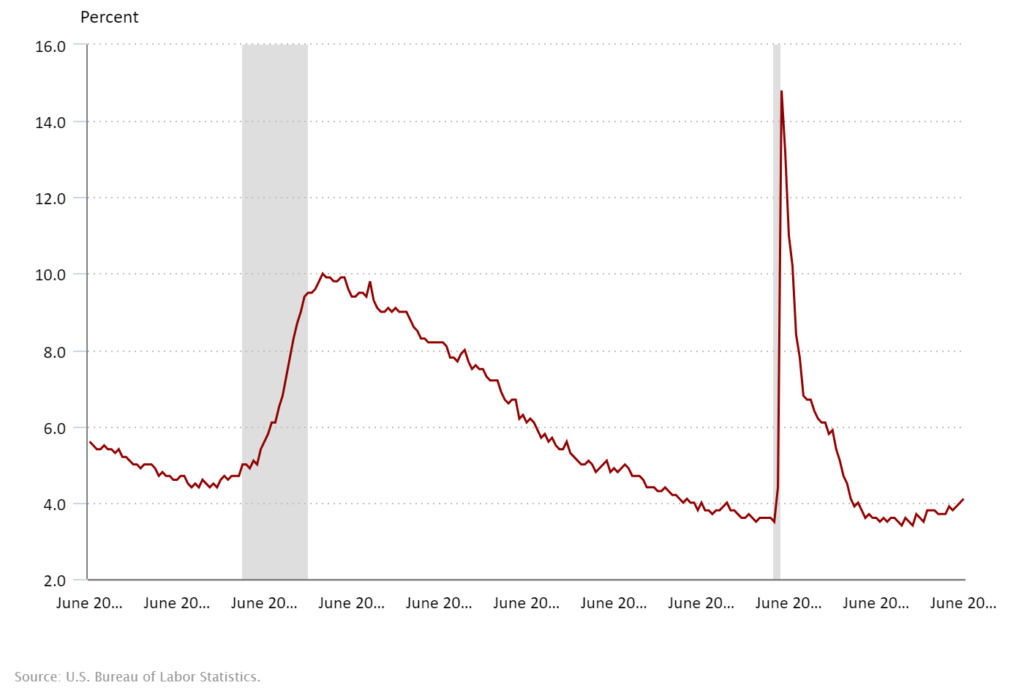
In June, employers’ payrolls increased by 206,000 jobs, and is a continuation of the 12-month trend of the U.S. adding an average 200,000 jobs each month. The national unemployment rate changed little at 4.1%, per the U.S. Bureau of Labor Statistics.
Q3 2024 employment report

What can we expect for the latter half of 2024? More of the same, but there is hope for economic growth to pick-up toward the end of the year as inflation continues its cool down from 2022’s peak of 9.1%.

“In all, the very cool inflation data provided clear evidence that inflation is slowing meaningfully, exactly the kind of progress that Fed officials have been hoping to see as they contemplate when to begin cutting interest rates,” explains the New York Times.

In fact, Grant Thorton’s new survey of more than 225 senior financial leaders showed that 56% of participants are feeling confident about growth projections. Even more, 58% of respondents said that attracting and retaining key talent is a priority for the next 12 months. And, with the demand for skilled accounting and finance professionals in a shrinking sector — Q3 and Q4 have a lot of optimism in store.

Here’s our forecast of what both employers and job seekers can expect in Q3 2024.

For Employers

In an uncertain market, it’s understandable for companies to be more cautious in their hiring decisions. But that tactic may be costing you top talent.

Slower interview processes and limiting hiring strategies to only permanent roles can be inhibiting businesses from landing candidates with the most in-demand skills, experience and credentials. Effective steps like streamlining recruitment approaches from five interviews to two, or taking on consultants while identifying that direct hire unicorn can help you get the right people in the seat without affecting productivity.

Another key factor to consider: what matters most to today’s worker. According to new research by Economist Impact, many employers are missing opportunities to align their benefits to employees’ expectations.

“Just three in 10 employees at mid- and large-sized American companies strongly agree that they are satisfied with their retirement plan,” the research showed. “Nearly six in 10 (57 percent) are not confident they will be able to retire at the federal retirement age.”

Evaluate your company’s compensation, benefits and other perks to see how they measure up. Not sure where to start? Check out some of these effective strategies that can help with both talent recruitment and retention.

For Job Seekers

The job market has been largely candidate-driven for the past few years, with the highest number of U.S. workers quitting their jobs in a single month peaking in April 2022. This clear power dynamic resulted in companies boosting salaries, offering flexible schedules and other attractive tactics to win over skilled talent.

Job seekers’ confidence has waned, however, and the quitting rate now sits below pre-pandemic levels at 2.2%. This trend comes alongside white-collar slowdown and decline in compensation for new hires, according to The Wall Street Journal.

Still, accounting and finance professionals do have an advantage — touting a much lower unemployment rate than the national average. Candidates seeking new opportunities in these functions can stand out from their peers by upskilling in areas that are most sought-after by employers, including, artificial intelligence, problem solving and earning advanced credentials.

Browse our most recent jobs in your area or connect with one of our seasoned recruiters today.

4 Reasons to Become an Auditor

You may be surprised to learn that an auditor is a dynamic profession offering diverse opportunities, ongoing growth and the potential to make an impact.

Auditors safeguard businesses from the devastating pitfalls of financial discrepancies while helping to uphold public trust in vital economic systems. If you like the idea of a career that combines accounting and analytical skills with ethical responsibility, becoming an auditor might suit you perfectly.

Here are four ways becoming an auditor can bring you professional achievement and personal satisfaction.

1. You Learn Highly Valued and Transferable Skills

Skills you develop in a career as an auditor can empower you to take your talents anywhere. While a mastery of finance and accounting is foundational to the job, auditors are strategic evaluators armed with an expansive and cutting-edge toolkit.

In addition to traditional analytical abilities, today’s auditors develop data visualization, analytics and IT capabilities. New technologies help auditors work smarter and faster, whether reviewing anomalies or tracing transaction cycles. This gives them the resources to tackle risk, provide strategic advice and generate vital insights.

As an auditor, you also develop communication skills that forge a solid foundation for later leadership positions. Honing abilities like identifying patterns and exceptions, critical thinking, explaining complex concepts to different people and brainstorming with colleagues make you versatile, valuable and recession-proof.

2. You Can Work Anywhere

As an auditor, you can work with companies anywhere across the country or worldwide. Skilled auditors are in high demand, and many corporations with offices in the U.S. have offices or do business with companies in other countries. If you want to travel and see the world, becoming an auditor can help you do that.

If you work in or with companies in a foreign country, you will need the appropriate licensing for that location. It’s also essential to learn applicable laws and regulations.

If you don’t want to travel, you can still work internationally. In today’s digital and virtual workplace, you can work with international companies from home or a local office.

3. Auditors Are in Demand

There is a high demand for qualified auditors. The U.S. Bureau of Labor Statistics reports 1,538,400 U.S. auditor and accounting positions in 2022, with an annual growth rate of 4%. Firms prioritize hiring an auditor after discovering an accounting or operational failure. Auditors are critical in helping businesses maintain integrity.

4. Work With Innovative and Interesting Clients

Working as an auditor gives you an inside view of innovative companies in every industry worldwide. Every public company has an external auditor, which means you have the unique opportunity to peek behind the curtain of some dynamic organizations.

Future Proof Your Skills by Becoming an Auditor

Whether you’re a recent graduate or a seasoned professional, working as an auditor can position you for outstanding professional experiences and long-term growth. As recruiting experts dedicated to accounting and finance, Century Group is here to help.